Wednesday, August 04, 2010
REL-Midwest - The Virtual Algebra Study: Impact of Offering an Online Algebra I Course to Eighth Graders With No Local Access

The first session of the afternoon at the
REL-Midwest: Online Learning Opportunities For Rural Schools event was "The Virtual Algebra Study: Impact of Offering an Online Algebra I Course to Eighth Graders With No Local Access" by Peggy Clements of the REL Northeast and Islands at Education Development Center.
Peggy began her session by describing that her results are still not approved for release (see
NRCRES Conference: Increasing Rural 8th Graders’ Access to Algebra I: Is Online Education An Effective Alternative? for an earlier entry roughly the same as this one), so she won't be providing any findings but will be discussing the study - particularly the nature of the intervention. As much of this was reported in
the previous entry, I'll just include additional comments here.
One of the things that Peggy did clarify was that the focus of the study was not to compare student performance between face-to-face and online students. It was focused on expand access to students who wouldn't otherwise have access to Algebra I in grade 8 (for the students that were ready to take algebra).
As a reminder, the primary research questions were:
- What is the impact of offering Algebra I online to AR students on their end-of-eighth grade algebra achievement?
- What is the impact of offering Algebra I online to AR students on their subsequent high school course taking?
The secondary research questions:
- What is the impact of offering Algebra I online to AR students on the N-AR students mathematics achievement?
- What is the impact of offering Algebra I online to AR students on the n-AR students subsequent high school course taking?
- What is the impact of offering Algebra I online to AR students on the AR general mathematics achievement?
This study was a randomized control trial, where the following groups existed:
- control - both groups received regular grade 8 mathematics course
- students identified by the school as algebra ready
- students identified by the school as not being algebra ready
- treatment
- students identified by the school as algebra ready - received the online Algebra 1 course
- students identified by the school as not being algebra ready - received regular grade 8 mathematics course
Peggy than began to describe the nature of the online Algebra I course - which was asynchronous, self-paced, with the presence of a school-based proctor. This set-up resulted in 80% of the students being in the back of the classroom, during the regular grade 8 mathematics class with the regular mathematics teacher being the proctor (and teaching the regular grade 8 math class during this time). The course was a Class.com course, taught by a teacher in Lincoln, Nebraska.
The remainder of the presentation was looking at samples of the online Algebra I course. It was basically a model where students would read through an online, interactive textbook or they could view an interactive chalkboard that provided a narrated worked example. After reviewing these items, students would complete practice and exploratory activities, along with graded assignments based on open-ended prompts and then graded multiple-choice quizzes.
The results are expected to be reported in Spring 2011.
Labels: conferences, cyber school, education, high school, presentations, REL Midwest, rural, rural education, virtual school
REL-Midwest - Enhancing Instruction In Rural Schools
The third session at the
REL-Midwest: Online Learning Opportunities For Rural Schools event was
a response to Matt's keynote presentation by:
- Nancy Burns, Superintendent, West Salem School District
- Dawn Nordine, Director, Wisconsin Virtual School and CESA 9 Instructional Technology
- Annette Walaszek, Teacher, Wisconsin Virtual School
Their response was entitled "Enhancing Instruction In Rural Schools".
Dawn was the first practitioner to respond to Matt's presentation. She began by highlighting the reasons why students in Wisconsin are enrolled in K-12 online learning experiences (and she also gave a big plug for
iNACOL here - as I believe the slide was taken from content found, or often used, by that organization). She continued with the standards "equal or better" lines. She did present some interesting statistics about the
Wisconsin Virtual School:
- 60% of students are enrolled in rural districts
- 83% are between the ages of 16 and 18 years old
- 170 school districts accessed courses through WVS in 2009-10
- top reason students take the online course is because it is not offered in their school
- average grade in 2009-10 was 84%
- average time spent in the course was 121 days
- number of hours spent per week in the course was 6-7 hours
She then discussed a study that they conducted with nine of their Local Education Guides (LEGs) from 2006 to 2008. They also found that the role of the school-based or local teacher was a critical role, and Dawn provided a series of quotes that were representative of the strategies that these LEGs used to keep students motivated in their online courses. Many of their training materials are available on their website (look for a
LEG Resource link).
Nancy was the next person to speak. She began with A LOT of her own personal history in rural education and online learning. In fact, most of Nancy's discussion was a history of rural education and online learning through her personal involvement.
The responses finished with Annette, who also gave a personal story - although more focused on a specific program... A blended experience in the Algoma School District, which came about when Annette only had a single student in her AP Physics student. In the end, after the guidance counselor was about to rope another three students into the course, the district created a program with a total of 24 students - 4 students at Algoma and 20 students from around the state. The remainder of her comments provided details about this blended program how she managed it, what the student success was, and her perceived advantaged and challenged with the program.
Labels: conferences, cyber school, education, high school, presentations, REL Midwest, rural, rural education, virtual school
REL-Midwest - Rural Distance Learning Project: Overview of Research And Findings
The second session at the
REL-Midwest: Online Learning Opportunities For Rural Schools event was a keynote presentation by Matt Irvin of the National Research Center on Rural Education Support on "Rural Distance Learning Project: Overview of Research And Findings".
He began with some of the same rural issues that Doris had mentioned, although with a focus on the small student populations limiting funding and course selection, along with the inability to attract and retain high quality teachers. While distance education can be used as a way to address some of these issues, there are some challenges for the use of distance education in the K-12 environment (including isolationism, lack of interaction, high drop-out rate).
He then moved to a discussion of the rural education education survey that they conducted in 2005-06. The survey included 400 randomly selected school districts, including 10% that qualified for the Small Rural School Achievement program and 10% that qualified for the Rural Low Income School program, and had a 95% participation rate. Some of the results included:
- 85% of school districts had used or were using distance education
- 69% currently using distance education
- 16% previously used distance education but had stopped
- limited student interest
- time scheduling issues
- lack of support personnel
- 81% were using it to offer advanced-level courses
- 35% using it for foreign language
- 12% for algebra
- students were very well prepared - both by there computer skills (77%), academic background (50%), and study skills (28%)
- most common barriers
- district barriers - not need for curriculum requirements, funding, not being a district priority
- logistical barriers - scheduling, and difficult to implement
- personnel barriers - not trained to support distance education or not available to support distance education
Matt then moved on to a discussion of the Enhancing Rural Online Learning project and the actual intervention or training that was created for the school-based facilitator. The study itself was a 2 year cluster randomized controlled trial that included:
- 2007-08 (Year 1) - 37 schools and 246 students
- 2008-09 (Year 2) - 56 schools and 463 students
The study thus far has found that the program reduced drop-out rate (i.e., student in an individual course and schools leaving the distance program), but did not appear to affect student learning. Based on the qualitative data, the teachers felt that the presence of a facilitator was crucial. The facilitators reported that the main challenges were with the students enrolled in AP courses (e.g., rigor of the course and grading, lack of face-to-face communication, and lack of immediate feedback from online instruction). Finally, the facilitators were positive towards the Facilitator Preparation Program, indicating that they were very, very helpful - as it clarified their role and need to actively support students.
Labels: conferences, cyber school, education, high school, presentations, REL Midwest, rural, rural education, virtual school
REL-Midwest – Framing the Conversation: Enhancing the Educational Outcomes of Rural Children Through Distance Learning and Technology
So, the first session at the
REL-Midwest: Online Learning Opportunities For Rural Schools event was a discussion on the topic "Framing the Conversation: Enhancing the Educational Outcomes of Rural Children Through Distance Learning and Technology" that began with some comments by Doris Terry Williams, the Director of Capacity Building for the Rural School and Community Trust.
Doris began with some quick facts about rural education.
- 19.4% of all students attend at rural school
- 10, 572, 790 students and counting (rural school enrollment is actually increasing)
- 32.3% of public elementary and secondary schools are designates as rural
- range from 9.5% of all schools in New Jersey are rural to 97+% in South Dakota
- 15 states have 50% or more of their schools designated as rural
- rural students have higher graduation rates
- 70% overall in rural districts
- 67% in all districts
- 60% in the poorest rural districts
- less per pupil funding for rural districts
- $9,611 in non-rural districts
- $8,134 in rural districts
- and many others that skipped across the screen before I was able to type them
Many of the points that I missed dealt with the connection between rural education and educating lower socio-economic status students.
On one of the final slides, entitled "Bottom Line..." it read:
Rural students, like all others, are entitled to a quality education- even if their local communities cannot afford or don't have the will to provide it.
Appropriate use of technology and distance education is one means of ensuring that they have greater access.
At that stage, the moderator introduced Matt Irvin of the National Research Center on Rural Education Support (and I'll discuss his keynote in my next blog entry).
Labels: conferences, cyber school, education, high school, presentations, REL Midwest, rural, rural education, virtual school
REL-Midwest: Online Learning Opportunities For Rural Schools
A reminder that
Regional Educational Laboratory (REL) - Midwest pre-conference event focused on
Online Learning Opportunities for Rural Schools is being held today and I will be blogging about all of the sessions (except my own, which I hope to record and podcast later).
Again, I'll disclose here that I am one of the keynote speakers at this REL-Midwest event. The
sessions they have organized include:
Wednesday, August 4, 2010
8:30−9:15 a.m. Registration
9:15–9:30 a.m. Welcome and Introductions
- Matt Dawson, Ph.D., Director, REL Midwest at Learning Point Associates
9:30–11:00 a.m. Framing the Conversation: Enhancing the Educational Outcomes of Rural Children Through Distance Learning and Technology
- Moderator: Doris Terry Williams, Ph.D., Director of Capacity Building for the Rural School and Community Trust
- Presenter: Matt Irvin, Ph.D., National Research Center on Rural Education Support
- Commentators:
- Nancy Burns, Superintendent, West Salem School District
- Dawn Nordine, Director, Wisconsin Virtual School and CESA 9 Instructional Technology
- Annette Walaszek, Teacher, Wisconsin Virtual School
11:00–11:30 a.m. Collaborative Discussion With Panel
11:30 a.m.–1:00 p.m. Lunch
1:00–2:00 p.m. The Virtual Algebra Study: Impact of Offering an Online Algebra I Course to Eighth Graders With No Local Access
- Keynote Presenter: Peggy Clements, Ph.D., REL Northeast and Islands at Education Development Center
2:00–2:45 p.m. Rural K–12 Students’ Learning in Virtual School Environments
- Keynote Presenter: Michael K. Barbour, Ph.D., Assistant Professor in Instructional Technology, Wayne State University
2:45–3:00 p.m. Break
3:00–3:45 p.m. Reflections and Connections
3:45–4:15 p.m. Sharing Connections and Concluding Remarks
- Presenters:
- Dr. Matt Irvin, National Research Center on Rural Education Support
- Dr. Peggy Clements, REL Northeast and Islands
- Dr. Michael Barbour, Wayne State University
4:15 p.m. Adjournment
Labels: conferences, cyber school, education, high school, presentations, REL Midwest, rural, rural education, virtual school
Sunday, July 11, 2010
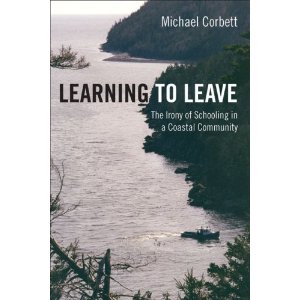
Special Issue - Learning To Leave: The Irony Of Schooling In A Coastal Community
About a year ago, the
Journal of Research in Rural Education hosted a special issue (that I had suggested to the editor during the
Rural Education Special Interest Group's business meeting at the annual meeting of the
American Education Research Association about a year earlier). The special issue was focused on
Michael Corbett's book,
Learning to Leave: The Irony of Schooling in a Coastal Community, an ethnography examining the impact of education on a rural, fishing community in Nova Scotia, Canada.
The special issue begins with
Michael's
journal article summary of his findings in
Learning to Leave: The Irony of Schooling in a Coastal Community, along with his reflections on those findings since the original publication of the book. This article is followed by other articles from scholars in a variety of rural contexts, reflecting upon
Michael's book (and
article) in their own rural environments. The special issue ends with
a commentary or response from
Michael to the other authors. All of these articles are listed below:
- M. Corbett - Rural Schooling in Mobile Modernity: Returning to the Places I've Been
- A. Woodrum - Cultural Identity and Schooling in Rural New Mexico
- S. Faircloth - Re-visioning the Future of Education for Native Youth in Rural Schools and Communities
- D. Greenwood - Place, Survivance, and White Remembrance: A Decolonizing Challenge to Rural Education in Moile Modernity
- U. Kelly - Learning to Lose: Rurality, Transience, and Belonging (A Companion to Michael Corbett)
- M. Corbett - Assimilation, Resistance, Rapprochement, and Loss: Response to Woodrum, Faircloth, Greenwood, and Kelly
I highlight this special issue here because I am often asked about my research agenda or the focus of my research. I generally respond something to the effect of that I have an interest in the effective design and delivery online learning to K-12 students in virtual school environments, particularly those in rural jurisdictions. I always add the "particularly those in rural jurisdictions" because my first teaching position was in a rural jurisdiction - very much like the one Michael describes in his book and the
original article in this special issue.
Labels: AERA, American Educational Research Association, articles, cyber school, education, high school, Journal of Research in Rural Education, rural, rural education, virtual school
Friday, June 18, 2010
VSM Podcast – AERA 2010: Duck And Cover: Are Rural Students Taking Basic Courses To Avoid Taking Them Online?
AERA 2010: Duck And Cover: Are Rural Students Taking Basic Courses To Avoid Taking Them Online?
Also note this entry is crossposted as VSM Podcast – AERA 2010: Duck And Cover: Are Rural Students Taking Basic Courses To Avoid Taking Them Online? at Virtual School Meanderings.
Labels: AERA, AERA 2010, conferences, cyber school, education, high school, podcast, podcasting, presentations, research, rural, rural education, VHSM Podcast, virtual school
VSM Podcast – AERA 2010: Duck And Cover: Are Rural Students Taking Basic Courses To Avoid Taking Them Online? Introduction

The May 2010 podcast is a recording of the first presentation that I made at the
AERA 2010 conference, and was also the third Sunday session related to K-12 online learning. It was described in the program as:
Scheduled Time: Mon, May 3 – 10:35am – 12:05pm Building/Room: Sheraton Denver / Grand Ballroom Section 2
In Session Submission: Rural Education SIG: Roundtable 7
Authors: *Dennis M. Mulcahy (Memorial University – Newfoundland)
*Michael Kristopher Barbour (Wayne State University)
Abstract: As out-migration ravages rural regions in Newfoundland and Labrador, more schools are relying upon virtual schooling to offer courses students require to graduate. There are concerns that virtual schooling has been shown to be an effective alternative, primarily, for a select group of students. However, with a wider range of students forced into this largely independent learning environment, data from Ministry of Education reports indicate that rural schools who rely upon the CDLI for their required course offering have a substantially higher than average enrollment in basic level courses. If the reason for this is due to students trying to avoid online courses, significant changes are required in the design, delivery and support of the province’s virtual school.
As always, the actual podcast is in the entry that immediately follows this one.
Note that this entry and the actual podcast are backdated to the time of the event.
Also note this entry is crossposted as VSM Podcast – AERA 2010: Duck And Cover: Are Rural Students Taking Basic Courses To Avoid Taking Them Online? Introduction at Virtual School Meanderings.
Labels: AERA, AERA 2010, conferences, cyber school, education, high school, podcast, podcasting, presentations, research, rural, rural education, VHSM Podcast, virtual school
Monday, May 03, 2010
AERA 2010 - Online Distance Education In Rural High Schools: Expanding The Role Of The On-Site Facilitator
The second session on K-12 online learning that I had outlined for Monday at the
AERA 2010 conference was:
Scheduled Time: Mon, May 3 – 10:35am – 12:05pm Building/Room: Sheraton Denver / Grand Ballroom Section 2
In Session Submission: Rural Education SIG: Roundtable 7
Online Distance Education in Rural High Schools: Expanding the Role of the On-Site Facilitator
Authors: *Julie Thompson Keane (University of North Carolina – Chapel Hill)
*Matthew J. Irvin (University of North Carolina – Chapel Hill)
Claire de la Varre (UNC-Chapel Hill)
Wallace Hannum (University of North Carolina)
Abstract: The main objective of this study was to provide a richer and more detailed understanding of facilitators’ experiences and explore the effect of an intervention to improve the support facilitators provide rural students taking an advanced online course. Little research has examined key factors in online distance education, how to improve outcomes, or has involved rural secondary schools. This is noteworthy as dropout rates are typically higher in online courses and rural schools more often use such courses. We identified important themes and experiences in facilitators’ role that may inform future practices and began to clarify the effect of our intervention. Additional findings and connections between results, the intervention, and support for rural youth in online courses will be provided.
Like the previous session, I was presenting while this session was happening (and I'll be making a podcast of this second Monday roundtable of mine too) - but as luck would have it these folks were presenting in the same session, so we were at the same table.
This paper was a part of the larger study that Matt and his colleagues have been doing at the National Research Center for Rural Education Support in North Carolina. The project was looking at the training of school-based facilitators who were supporting virtual school students at rural schools. In the quantitative data, they had found that in the control group (i.e., where facilitators weren’t trained) there was a 70% drop-out rate, whereas in the treatment group (i.e., where facilitators had received their training) had a drop-out rate of only 40%. This particular paper focused on the qualitative data they have been collecting.
One of the main themes that came out was the rigor of the courses – particularly the Advanced Placement curriculum, which essentially scared the students out of the courses.
Another one of the main themes related to the facilitators positive views towards the scenarios that the NRCRES developed. Essentially these were cases that focused on issues that students might experience in a virtual school environment to help prepare the teachers for what their students might have to go through.
A third theme was the students concerns with their grades. As many of the students were the higher achieving students, they did not want anything that would potentially jeopardize their academic standing within the school and for their educational futures.
Another issue that came up related to notions of time management and helping students develop strategies for better structure and managing of their time.
Finally, there was a theme related to the benefits of virtual school – which was primarily related to the ability to enroll in some of these advanced-level or Advanced Placement courses that had never been offered at their local schools. There were also some comments related to personal growth, preparation for potential online studies they might have to take in post-secondary.
Note this entry is crossposted as AERA 2010 – Online Distance Education In Rural High Schools: Expanding The Role Of The On-Site Facilitator at Virtual School Meanderings.
Labels: AERA, AERA 2010, conferences, cyber school, education, high school, presentations, research, virtual school
Sunday, April 18, 2010
NMSTE 2010 Conference Free Virtual Strand

This appeared in the
iNACOL forums a few days ago. Note the session on "Extending Broadband Across Rural School Districts".
Register #nmste10 free Virtual Conference Strand http://bit.ly/cUspMi happening now. Attend April 21-22 (MST) some of the conference online! 50-minute sessions include Teaching Science Online & Virtual Labs; Educational Uses of Animations; K12 Social: Considerations and Possibilities; Open Learning - How To become a ‘Curriculum Architect’ With Open Content
The complete list of sessions is available at
http://webinars.nmsu.edu/series-detail.cfm?id=16 and includes:
- Tech. Happy Hour - TBA
- Extending Broadband Across Rural School Districts - Jeff Cangialosi
- Teaching Science Online & Virtual Labs - Dr. Julia Parra
- Educational Uses of Animations - Bethany Bovard
- K12 Social: Considerations and Possibilities - Holly Rae Bemis-Schurtz
- E-Rate DIY (Do It Yourself) and Save $$ - Eddie Quispe, Vickie Garcia, Steven Kluess
- Open Learning - How To become a ‘Curriculum Architect’ With Open Content - Katrina Coker
If you have the time later this week, you should consider attending one or more of these webinars.
Labels: conferences, cyber school, education, high school, New Mexico, NMSTE 2010, virtual school, webinar
Friday, November 06, 2009
NRCRES Conference: Increasing Rural 8th Graders' Access to Algebra I: Is Online Education An Effective Alternative?
The final day of
The National Research Center on Rural Education Support's
Supporting Rural Schools and Communities Research Conference (see
program here). The breakout session today that focused upon K-12 distance education is:
8:00 - 9:45
Break-Out Session I
Distance Education and Technology
Chairs: Judith Meece and Matthew Irvin
Discussant: Miles Bryant (UNL)
Presenters:
- Wallace Hannum (UNC-CH) and Matthew Irvin (UNC-CH) - Enhancing Distance Education in Rural Schools
- Michael Barbour (Wayne State University) - Supporting K-12 Students Online: Local schools, Virtual Schools, and Teacher Education
- Peggy Clements (REL-NEI) - Increasing Rural 8th Graders' Access to Algebra I: Is Online Education an Effective Alternative?
- Steve Oliver (UGA) - Relevance of NSF Drivers of Systemic Reform for Instructional Technology Interventions
This entry is focused on the first group in this session:
Peggy Clements (REL-NEI) - Increasing Rural 8th Graders' Access to Algebra I: Is Online Education an Effective Alternative?
The session began with a rationale for her study... Studying Algebra I because it is a gatekeeping course for more advanced mathematics, and studying it in an online environment with eighth graders because online delivery is a common way to increase access to curricular opportunities. The sample focused on 70 schools in Maine and Vermont that did not previously offer Algebra I courses in their school. The students who were the focus of the study were "algebra ready" (AR) eighth graders (based on the decision of the schools), but they were also interested in any side affects for the three quarters of eighth grade "non-algebra ready" students who were left in the classroom environment.
The primary research questions were:
- What is the impact of offering Algebra I online to AR students on their end-of-eighth grade algebra achievement?
- What is the impact of offering Algebra I online to AR students on their subsequent high school course taking?
The secondary research questions:
- What is the impact of offering Algebra I online to AR students on the N-AR students mathematics achievement?
- What is the impact of offering Algebra I online to AR students on the n-AR students subsequent high school course taking?
- What is the impact of offering Algebra I online to AR students on the AR general mathematics achievement?
Unfortunately, while the research project has been completed the funding agency hasn't approved the report yet - so the presenter was not able to discuss the results.
As a side note, on two separate occasions the presenter decided to "correct" something she thought I had said in my presentations - the first time she clearly wasn't listening to what I said and the second time it was something she appears to have made up altogether. Crossposted at Virtual High School Meanderings.
Labels: AERA, conferences, cyber school, education, high school, National Research Center on Rural Education Support, research, rural, rural education, small schools, virtual school
NRCRES Conference: Enhancing Distance Education In Rural Schools
The final day of
The National Research Center on Rural Education Support's
Supporting Rural Schools and Communities Research Conference (see
program here). The breakout session today that focused upon K-12 distance education is:
8:00 - 9:45
Break-Out Session I
Distance Education and Technology
Chairs: Judith Meece and Matthew Irvin
Discussant: Miles Bryant (UNL)
Presenters:
- Wallace Hannum (UNC-CH) and Matthew Irvin (UNC-CH) - Enhancing Distance Education in Rural Schools
- Michael Barbour (Wayne State University) - Supporting K-12 Students Online: Local schools, Virtual Schools, and Teacher Education
- Peggy Clements (REL-NEI) - Increasing Rural 8th Graders' Access to Algebra I: Is Online Education an Effective Alternative?
- Steve Oliver (UGA) - Relevance of NSF Drivers of Systemic Reform for Instructional Technology Interventions
This entry is focused on the first group in this session:
Wallace Hannum (UNC-CH) and Matthew Irvin (UNC-CH) - Enhancing Distance Education in Rural Schools
This session was a follow-up or more detailed focus on the qualitative results from yesterday's session (see
NRCRES Conference: Overview Of The Enhancing Rural Online Learning Project). The data was based on discussion boards and interviews. Some of the findings included:
- scenarios very useful to facilitators
- felt strategies likely effective but time limitations often impeded use
- already knew students and families very well
- the APA Learner Centered Principles may be better for less experienced educators
Interestingly, the research targeted what they called "very small" rural school and for over 80% of the schools that participated in their study this was the first time they had online learning in their schools. Based on their findings, they found that the best facilitators
- communcated regularly
- kept teacher informed of absences in advance
- had some connection to the content
- were aware of what students were doing
- assisted students with daily activities
- kept students on task
- were more than just a "baby sitter"
- checked daily e-mails from teacher
- were effective classroom managers
In terms of practice, the researchers found the facilitators were likely important, particularly when there was good communication and awareness of the role.
Crossposted at Virtual High School Meanderings.
Labels: AERA, conferences, cyber school, education, high school, National Research Center on Rural Education Support, research, rural, rural education, small schools, virtual school
NRCRES 2009: Supporting K-12 Students Online: Local schools, Virtual Schools, And Teacher Education
The final day of
The National Research Center on Rural Education Support's
Supporting Rural Schools and Communities Research Conference (see
program here). The breakout session today that focused upon K-12 distance education is:
8:00 - 9:45
Break-Out Session I
Distance Education and Technology
Chairs: Judith Meece and Matthew Irvin
Discussant: Miles Bryant (UNL)
Presenters:
- Wallace Hannum (UNC-CH) and Matthew Irvin (UNC-CH) - Enhancing Distance Education in Rural Schools
- Michael Barbour (Wayne State University) - Supporting K-12 Students Online: Local schools, Virtual Schools, and Teacher Education
- Peggy Clements (REL-NEI) - Increasing Rural 8th Graders' Access to Algebra I: Is Online Education an Effective Alternative?
- Steve Oliver (UGA) - Relevance of NSF Drivers of Systemic Reform for Instructional Technology Interventions
This entry is focused on my presentation in this session:
Michael Barbour (Wayne State University) - Supporting K-12 Students Online: Local schools, Virtual Schools, and Teacher Education
As this was my session, the best I can do is post the slides I used. These are available at:
http://www.michaelbarbour.com/research/pubs/nrcres-2009.pdf
If you have any questions about this presentation, feel free to ask.
Crossposted at Virtual High School Meanderings.
Labels: AERA, conferences, cyber school, education, high school, National Research Center on Rural Education Support, research, rural, rural education, small schools, virtual school
Thursday, November 05, 2009
NRCRES Conference: Overview Of The Enhancing Rural Online Learning Project
So, I'm sitting at
The National Research Center on Rural Education Support's
Supporting Rural Schools and Communities Research Conference (see
program here). The only session today that focused upon K-12 distance education is:
1:30 - 2:15
EROL Presentation
Wallace Hannum and Matthew Irvin
Overview of the Enhancing Rural Online Learning Project
The session began with Wally providing an overview of the five years worth of work that has gone into this project. Wally felt that distance education at the K-12 level was particularly well placed to address many of the issues related to rural education (e.g., geographic isolation, fewer numbers of students, difficulties in recruiting and retaining teachers in certified advanced courses, rural school's ability to provide advanced/AP courses).
Their
distance learning administrator survey was sent to 400 randomly selected superintendents of rural school districts (95% rate of return). Some of their main findings
- 74% offered some form of distance education
- online or web-based formats were the most common
- technology requirements not a barrier
- administrators felt students were prepared in academic and computer skills, but less so in study skills
- most wanted more distance education
One one of Wally's slides, there was a bullet that read:
- online courses are as effective as traditional courses, but
- greater drop-out
- less engagement
- feelings of isolation
- research rarely involved high schools or rural youth
From the beginning of the project, the researchers viewed the results through the lens that the presence of a local facilitator is key. The local facilitator:
- must provide "human component" of teaching that is largely missing when teacher not present
- must establish and maintain on-going relationships
- must provide support, guidance, help with self- regulation and study skills, etc.
And also through the lens of the
APA Learner Centered Principles. Based on the results on an initial survey, the researchers developed a professional development program that taught local facilitators on how to use the learner centered principles. Using data from an initial pilot study, the researchers moved from a direct instruction PD program that focused on the learner centered principles to a more constructivist program that utilized various scenarios based upon actual examples that local facilitators reported experiencing during that pilot year.
Much of this earlier work was described in this following article (I'm pretty sure):
Hannum, W. H., Irvin, M. J., Banks, J. B., & Farmer, T. W. (2009). Distance education use in rural schools. Journal of Research in Rural Education, 24(3). Retrieved 17 April 2009 from http://jrre.psu.edu/articles/24-3.pdf
Next Matt took over and began to describe a cluster randomized experimental design study that they completed with the local facilitators during the final two years of the project. Matt provided a detailed background into the design of the study and the nature of the sample that they had over the two year period. Matt then turned it over to one of his colleagues, who's name I didn't catch, to describe the method of data analysis and eventually the results.
In looking at the results, there were several statistically significant (and I missed many of these, as the speaker went through them very quickly):
- the control group had more AP courses
- the treatment group (i.e., those that had local facilitators) had spent more time [doing something or other]
- there was a higher dropout rate in the control group (i.e., those that did not hve local facilitators) of about 10% - but both numbers were high (more than a third for the treatment group and almost half for the control group)
- males has lower AP scores
- those who are on free or reduced lunch were less likely to score high on the AP exam
- and again I missed about two thirds of these due to an inability to understand the statistical tables presented and the speed of the presenter
Matt ended with a brief discussion of future directions. At present, they still have a lot of data that they can analyze and analyze in new ways. The researchers also want to continue to develop and refine the professional development program for the local facilitators.
Crossposted at Virtual High School Meanderings.
Labels: AERA, conferences, cyber school, education, high school, National Research Center on Rural Education Support, research, rural, rural education, small schools, virtual school
Tuesday, November 03, 2009
Reminder: National Research Center on Rural Education Support: Supporting Rural Schools and Communities Research Conference
A reminder about this event and the fact that I'll be blogging about it while I am there - both at
Virtual High School Meanderings for the K-12 online learning entries and here for the other entries.
The National Research Center on Rural Education Support is hosting the
Supporting Rural Schools and Communities Research Conference from 05-06 November 2009 at the Carolina Inn, University of North Carolina at Chapel Hill. Among other presentations on the
program, are two sessions related to K-12 online learning.
05 November 20091:30pm to 2:15pm - Overview of the Enhancing Rural Online Learning Project by Wallace Hannum and Matthew Irvin
06 November 20098:00am to 9:45pm - Distance Education and Technology chaired by Matt Irvin and Judith Meece, with Miles Bryant as discussant
- Enhancing Distance Education in Rural Schools by Wallace Hannum and Matthew Irvin
- Supporting K-12 Students Online: Local schools, Virtual Schools, and Teacher Education by Michael Barbour
- Increasing Rural 8th Graders' Access to Algebra I: Is Online Education an Effective Alternative? by Peggy Clements
- Relevance of NSF Drivers of Systemic Reform for Instructional Technology Interventions by Steve Oliver
Registration information is currently online, along with the
complete program. Hope to see some of you there.
Crossposted at
Virtual High School Meanderings.
Tags: AERA, conferences, cyber school, education, high school, National Research Center on Rural Education Support, research, rural, rural education, small schools, virtual schoolLabels: AERA, conferences, cyber school, education, high school, National Research Center on Rural Education Support, research, rural, rural education, small schools, virtual school
Friday, September 11, 2009
National Research Center on Rural Education Support: Supporting Rural Schools and Communities Research Conference
I'll post another entry about this event as the time grows closer, and of course I'll be blogging about it while I am there - both at
Virtual High School Meanderings for the K-12 online learning entries and here for the other entries - but I wanted to get the information out now in case there were those who may want to attend (and not just follow along via these two blogs).
The National Research Center on Rural Education Support is hosting the
Supporting Rural Schools and Communities Research Conference from 05-06 November 2009 at the Carolina Inn, University of North Carolina at Chapel Hill. Among other presentations on the
program, are two sessions related to K-12 online learning.
05 November 20091:30pm to 2:15pm - Overview of the Enhancing Rural Online Learning Project by Wallace Hannum and Matthew Irvin
06 November 20098:00am to 9:45pm - Distance Education and Technology chaired by Matt Irvin and Judith Meece, with Miles Bryant as discussant
- Enhancing Distance Education in Rural Schools by Wallace Hannum and Matthew Irvin
- Supporting K-12 Students Online: Local schools, Virtual Schools, and Teacher Education by Michael Barbour
- Increasing Rural 8th Graders' Access to Algebra I: Is Online Education an Effective Alternative? by Peggy Clements
- Relevance of NSF Drivers of Systemic Reform for Instructional Technology Interventions by Steve Oliver
Registration information is currently online, along with the
complete program. Hope to see some of you there.
Crossposted at
Virtual High School Meanderings.
Tags: AERA, conferences, cyber school, education, high school, National Research Center on Rural Education Support, research, rural, rural education, small schools, virtual schoolLabels: AERA, conferences, cyber school, education, high school, National Research Center on Rural Education Support, research, rural, rural education, smal schools, virtual school
Thursday, April 16, 2009
AERA 2009 - Barriers to Distance Education in Rural Schools
Crossposted from http://virtualschooling.wordpress.com/2009/04/17/aera-2009-barriers-to-distance-education-in-rural-schools/. Okay, the last two or three entries related to the K-12 Online Learning Presentations at the annual meeting of the American Educational Research Association in San Diego. The first one of Thursday was part of a session entitled Distance Education in Rural Contexts and it was delivered by folks from the National Research Center on Rural Education:
Barriers to Distance Education in Rural Schools
Schedule Information:
Scheduled Time: Thu, Apr 16 - 12:25pm - 1:55pm Building/Room: San Diego Marriott Hotel & Marina / Newport Beach
In Session: Distance Education in Rural Contexts
Authors:
Matthew J. Irvin (University of North Carolina - Chapel Hill)
Wallace Hannum (University of North Carolina)
Claire de la Varre (University of North Carolina - Chapel Hill)
Abstract: This investigation examined barriers to distance education (DE) as perceived by rural school administrators in 417 districts randomly selected from the 2004-2005 Rural Education Achievement Program (REAP). This study is the first to examine rural schools’ barriers to DE and related factors (district characteristics, course subjects, delivery format, student preparation, course completion, and satisfaction with DE). Results indicate that barriers are most consistently related to district characteristics, course subjects, delivery format, student preparation, and satisfaction with DE. Results suggest that rural schools with district and personnel barriers need to address other related issues to ensure successful DE efforts. Additional implications and suggestions for dealing with these barriers and issues will be discussed.
This presentation was based on an article that these individuals had published earlier in:
Hannum, W. H., Irvin, M. J., Banks, J. B., & Farmer,T. W. (2009). Distance education use in rural schools. Journal of Research in Rural Education, 24(3). Retrieved 17 April 2009 from http://jrre.psu.edu/articles/24-3.pdf
A couple of the main things that I took away from this presentation, was the order of the barriers found in their study. However, I digress a bit. This presentation was a survey study of 394 randomly selected rural schools from across the country (which was a 95% response rate) conducted in 2005.
In their responses, these rural districts indicated the following as barriers to K-12 distance education
- Not needed for curriculum requirements - 67.7% (District barrier)
- Lack of sufficient funding - 63.7% (District barrier)
- Problems scheduling - 58.7% (Logistical barrier)
- Not a district priority - 53.2% (District barrier)
- Personnel not trained to support - 46.8 (Personnel barrier)
- Difficult to implement - 45.2% (Logistical barrier)
- Do not have personnel to support - 33.7% (Personnel barrier)
- Difficulty finding courses needed - 31.1% (Logistical barrier)
- Not part of the strategic plan - 28.3% (District barrier)
- Lack of technical expertise - 17.1% (Personnel barrier)
- Lack of technology enhanced rooms - 15.1% (Technology barrier)
- Technology inadequately maintained - 9.5% (Technology barrier)
- Insufficient connectivity - 7.4% (Technology barrier)
A couple of take aways for me from this list and the presenters discussion of it. The first is that three of the top four barriers were classified as “district barriers” or things that the district had or had not done that prevented or made implementing distance education difficult for these schools. The second thing that really stood out to me was that the three technology barriers were all at the very bottom of the list, which seems to me to indicate that state and federal programs in the United States have done an adequate job in providing the necessary computer technology and connectivity/bandwidth to access distance education opportunities.
Anyway, you should be able to access both their paper and their PowerPoint slides soon at the National Research Center on Rural Education website:
http://www.nrcres.org/
Labels: AERA, AERA 2009, conferences, cyber school, education, high school, K-12 online learning, presentations, research, rural, small schools, virtual school
AERA 2009 - Distance Education in Rural Contexts
Crossposted from http://virtualschooling.wordpress.com/2009/04/17/aera-2009-distance-education-in-rural-contexts/.Okay, this is the last post I will be making from the
2009 annual meeting of the
American Educational Research Association, as all of the
K-12 Online Learning Presentations have been made. This final post details the comments made by the discussant regarding the final two presentations:
Barriers to Distance Education in Rural Schools and
Beyond Volunteerism and Good Will: Examining the Commitment of School-Based Teachers to Distance Education. The actual session was:
Distance Education in Rural Contexts
Sponsor:
SIG-Rural Education
Schedule Information:
Scheduled Time: Thu, Apr 16 - 12:25pm - 1:55pm Building/Room: San Diego Marriott Hotel & Marina / Newport Beach
Title Displayed in Event Calendar: Distance Education in Rural Contexts
Session Participants:
Barriers to Distance Education in Rural Schools
*Matthew J. Irvin (University of North Carolina - Chapel Hill), Wallace Hannum (University of North Carolina), Claire de la Varre (University of North Carolina - Chapel Hill)
Beyond Volunteerism and Good Will: Examining the Commitment of School-Based Teachers to Distance Education
*Dennis M. Mulcahy (Memorial University - Newfoundland), *Michael Kristopher Barbour (Wayne State University)
Distance, Climate, Demographics, and the Development of Online Courses in Newfoundland and Labrador
*Scott Reid (University of Ottawa)
Teacher’s Experiences of Rural School Reorganization
*Catherine Savage (Victoria University, Australia)
Discussant: Kevin Patrick Brady (North Carolina State University)
Chair: Michael Kristopher Barbour (Wayne State University)
As I mentioned above, you can see some of the information about the first two at Barriers to Distance Education in Rural Schools and Beyond Volunteerism and Good Will: Examining the Commitment of School-Based Teachers to Distance Education. The description of the third and fourth presentations were:
Distance, Climate, Demographics, and the Development of Online Courses in Newfoundland and Labrador
One of the assertions of the Actor Network Theory is that physical factors can be actors within a network of other factors which determine the development and use of technology. This paper documents the impact of climate, distance and demographics on the adoption of online courses at Memorial University of Newfoundland in Canada. The qualitative study demonstrates that these physical factors did influence professor’s decisions to use online courses. The findings support the Actor Network Theory and provide insight into the interaction of physical and human actors within a network that facilitated the adoption of online courses at the university being studied.
Teacher’s Experiences of Rural School Reorganization
An oversupply of rural schools in some areas increases the likelihood of school mergers to create more efficient and effective provision of schooling. This research investigated a rural school reorganization led by the New Zealand Ministry of Education. Interviews with 6 teachers were held on three separate occasions throughout 10 months of the reorganization process. The interviews were analysed using content analysis and conclusions were reached using an inductive method of categorising. The impact of reorganization on teacher’s personal and professional lives is significant and unique to the process of change. Further research in policy design and implementation is required to ensure future rural school reorganizations are successful.
The discussant’s comments were focused, as he mentioned a couple of overall themes and them provided each of the presenters with some specific feedback.
In discussing the first K-12 Online Learning Presentations, Barriers to Distance Education in Rural Schools, the discussant was pleased to see that the general availability in rural areas was high - particularly in North Carolina, where both the presenters and the discussants were from. It was particularly promising to see that technology issues were rated as very low, something which the discussant attributed to the various federal and state programs that have been put in place to bring Internet access to rural communities. In beginning to transition to his discussion of my own paper, he specifically noted a personnel barriers (although not one of the ones brought up by the presenters) - the need or difficulty in getting highly qualified teachers and administrators in rural areas and how the distance education to provide access to these personnel lacks from of the personal connection, so distance teachers have to work harder to build relationships with students and schools.
In his discussion of my paper, Beyond Volunteerism and Good Will: Examining the Commitment of School-Based Teachers to Distance Education, he spoke about the fact that local personnel is critical to the successful implementation of any program, distance education or otherwise. And that having good local personnel is largely dependent upon providing proper professional development and an adequate commitment of time for that personnel.
As the other two presentations did not deal with K-12 Online Learning I did not take notes for his comments about them - but if you’re reading this Kevin feel free to add them in the comments area.
Overall, the discussant felt that all four presentations showed great promise for distance education as a way to meet the challenges facing rural schools. He also felt that more research was needed into the personnel barriers, as he felt that they were both complex and multifaceted.
Labels: AERA, AERA 2009, conferences, cyber school, education, high school, K-12 online learning, presentations, research, rural, small schools, virtual school
AERA 2009 - Beyond Volunteerism and Good Will: Examining the Commitment of School-Based Teachers to Distance Education
Crossposted from http://virtualschooling.wordpress.com/2009/04/17/aera-2009-beyond-volunteerism-and-good-will-examining-the-commitment-of-school-based-teachers-to-distance-education/.
The last K-12 Online Learning Presentations at the 2009 annual meeting of the American Educational Research Association was one of my own:
Beyond Volunteerism and Good Will: Examining the Commitment of School-Based Teachers to Distance Education
Schedule Information:
Scheduled Time: Thu, Apr 16 - 12:25pm - 1:55pm Building/Room: San Diego Marriott Hotel & Marina / Newport Beach
In Session: Distance Education in Rural Contexts
Authors:
Dennis M. Mulcahy (Memorial University - Newfoundland)
Michael Kristopher Barbour (Wayne State University)
Abstract: Two decades ago Newfoundland and Labrador introduced distance education in the K-12 environment. The program focused upon providing advanced-level courses to rural school students, and worked largely due to the widely known, but rarely documented significant amounts of content-based assistance from school based personnel. In the past seven years the province has moved to a virtual school model of distance education and more rural schools find that they must rely upon this virtual school to offer academic-level courses to students with a wide range of abilities. This has created many new responsibilities for teachers that have also gone undocumented. This study will begin to document the duties and time required to provide support for this new models of distance education.
As I was the one delivering this, I don’t have notes to share. But you can access the PowerPoint slides of my presentation at:
http://www.michaelbarbour.com/research/pubs/aera-2009_m-teacher.pdf
Labels: AERA, AERA 2009, conferences, cyber school, education, high school, K-12 online learning, presentations, research, rural, small schools, virtual school
Wednesday, April 15, 2009
AERA 2009 - Rurality and Virtual School Environments: An Analysis of Student and Teacher Expectations
Crossposted from http://virtualschooling.wordpress.com/2009/04/16/aera-2009-rurality-and-virtual-school-environments-an-analysis-of-student-and-teacher-expectations/.
As I mentioned in the previous entry (see AERA 2009 - Virtual School Student Performance in a Rural and Remote Jurisdiction), I didn’t get much of Kevin’s session, but I did get his hand-out and had a quick conversation related to his roundtable.
Rurality and Virtual School Environments: An Analysis of Student and Teacher Expectations
Schedule Information:
Scheduled Time: Wed, Apr 15 - 12:25pm - 1:05pm Building/Room: San Diego Marriott Hotel & Marina / Marriott Hall Salon 4
In Session: Rurality, Community, and Education
Authors:
Kevin Patrick Brady (North Carolina State University)
Kevin M. Oliver (North Carolina State University)
Ruchi Patel (North Carolina State University)
Jason W. Osborne (North Carolina State University)
Abstract: A mixed methods evaluation was conducted of the new North Carolina Virtual Public School (NCVPS) analyzing student and teacher expectations in virtual school environments. In this proposal, special attention is given to the impact of rurality on student and teacher expectations associated with virtual schools. North Carolina is currently one of twelve states where rural children comprise a majority of the students attending the state’s public elementary and secondary schools. Based on this proposal, study findings can be used to establish the expectations for online teachers and students taking online courses as well as help design effective professional development experiences that adequately prepare teachers to undertake divergent roles unique to online instruction in rural communities.
In the survey they completed, there were only three of the thirteen statements were there was a statistically significant difference between the urban and rural responses.
- Administrators at my school are enthusiastic to promote NCVPS and LEO to the benefit of student’s 21st Century education
- My school emphasizes how online courses can be accommodating for different knowledge levels.
- Coaching and student support on efficiency and online course management is adequate at my school.
In all three instances the mean response from the rural participants was higher than the urban participants.
If any of the presenters are reading this and they want to add more, feel free to add it in the comments area - cause I know this is very bare bones based on about five minutes of conversation.
Labels: AERA, AERA 2009, conferences, cyber school, education, high school, K-12 online learning, presentations, research, rural, small schools, virtual school


